Before The Grandkids Sleep Over, Give Your CO Detector This Hallway Test
We tested the 6 things most homes rely on. Five failed the very first question.

The furnace kicks on. It will run all night. The windows are shut tight.
Your granddaughter is asleep in the little room at the end of the hall. Her stuffed rabbit is on the floor. Her nightlight is on.
On the ceiling outside her door, a small white alarm glows green. The same one that's been up there for years.
You wake up foggy. Your wife says her head is pounding too. The dog won't get out of his bed.
You crack a window and feel better by lunch. Nobody ever connects it to the house.
That alarm isn't broken. It's doing exactly what it was built to do.
That's the problem. It was never built to tell you what she is breathing right now.
Go Look At Your Detector. Right Now.
Do something for me before you read another word. How far is it from the bed where your grandkids sleep? Now the hard one. When was the last time it told you anything at all?
Most people can't answer that. Nobody ever showed them what to look for.
So we lined up the six things most American homes count on to warn them about deadly air. Then we asked each one the same 7 questions. You can ask them in your own hallway in five minutes. The results are ugly. A couple may keep you up tonight. Grab a pen. Let's go.
Question 1 of 7 Does it show you a number, or just a light?
Almost every option fails right here.
For most homes, the detector is a small green dot. Most people think it means "the air is safe."
It doesn't. A green light only means the unit has power.
It does not measure anything. It has never once told you what is in the air your kids are breathing.
Most of us bought our carbon monoxide alarm like a light bulb. Whatever was on the shelf. Then we trusted its little green light with the people we love most.
Think about how many nights you walked past that dot. Thousands. Every single one, you thought it was watching. It was just plugged in.
Some families have trusted the same green dot for 22 years. Through three furnaces. Through every new baby brought home from the hospital.
You're the one who checks the locks before bed. When there's a noise downstairs at 2 a.m., you're the one who gets up and goes to look.
That's who you are. The one this family counts on.
Here's the part that's hard to hear. The most important job in your house at 2 a.m.? You handed it to a small plastic box. Then you stopped thinking about it.
Not because you don't care. Because the green light said, "I've got this." Anybody would believe it.
Remember the baby monitor you set up when your first grandchild came home? Would you have bought one with no sound and no picture? Just a green light?
Of course not. You wanted to hear her breathe. So why do we accept a green light for the air she breathes?
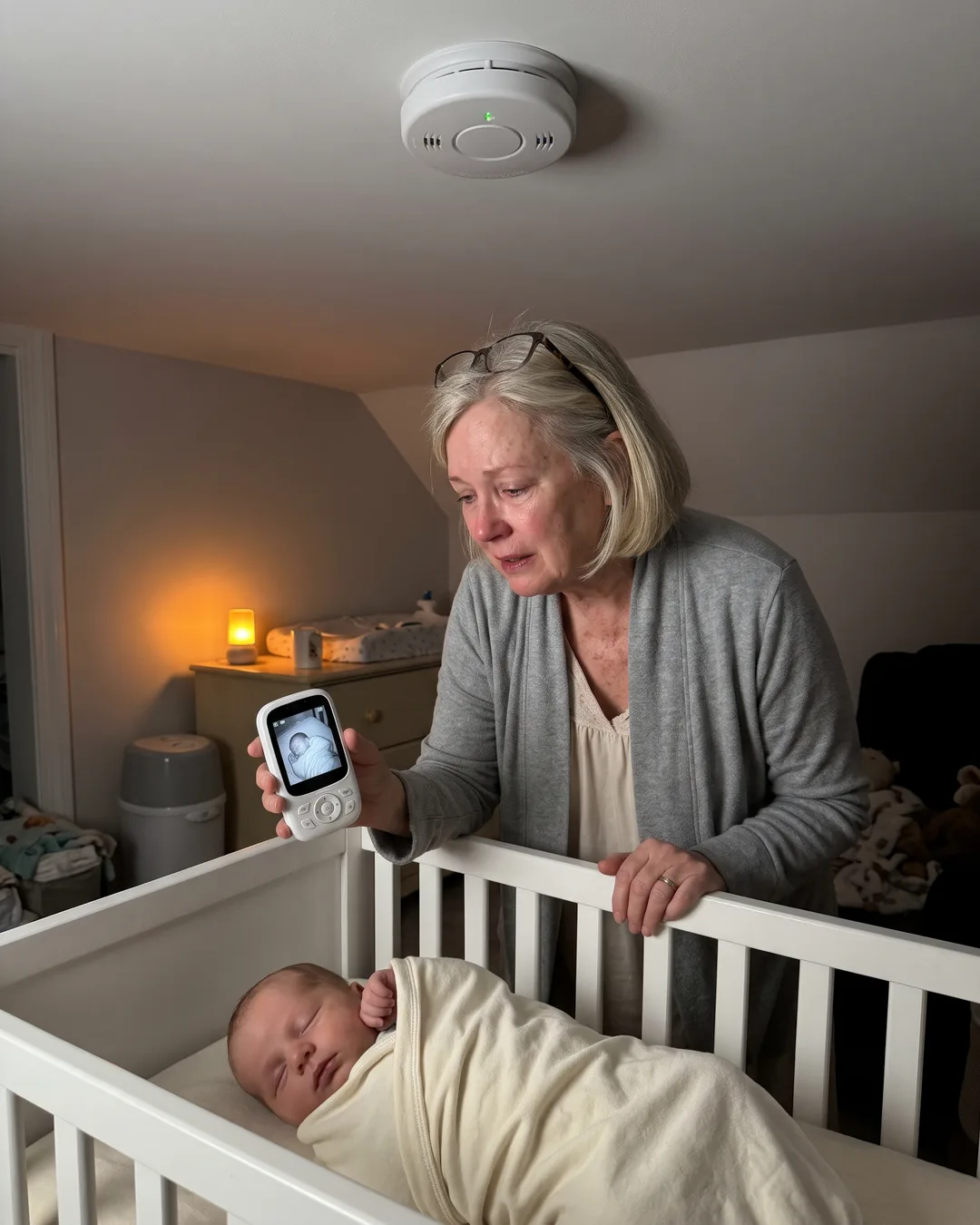
A number lets you see trouble coming. A light only reacts after trouble is already here.
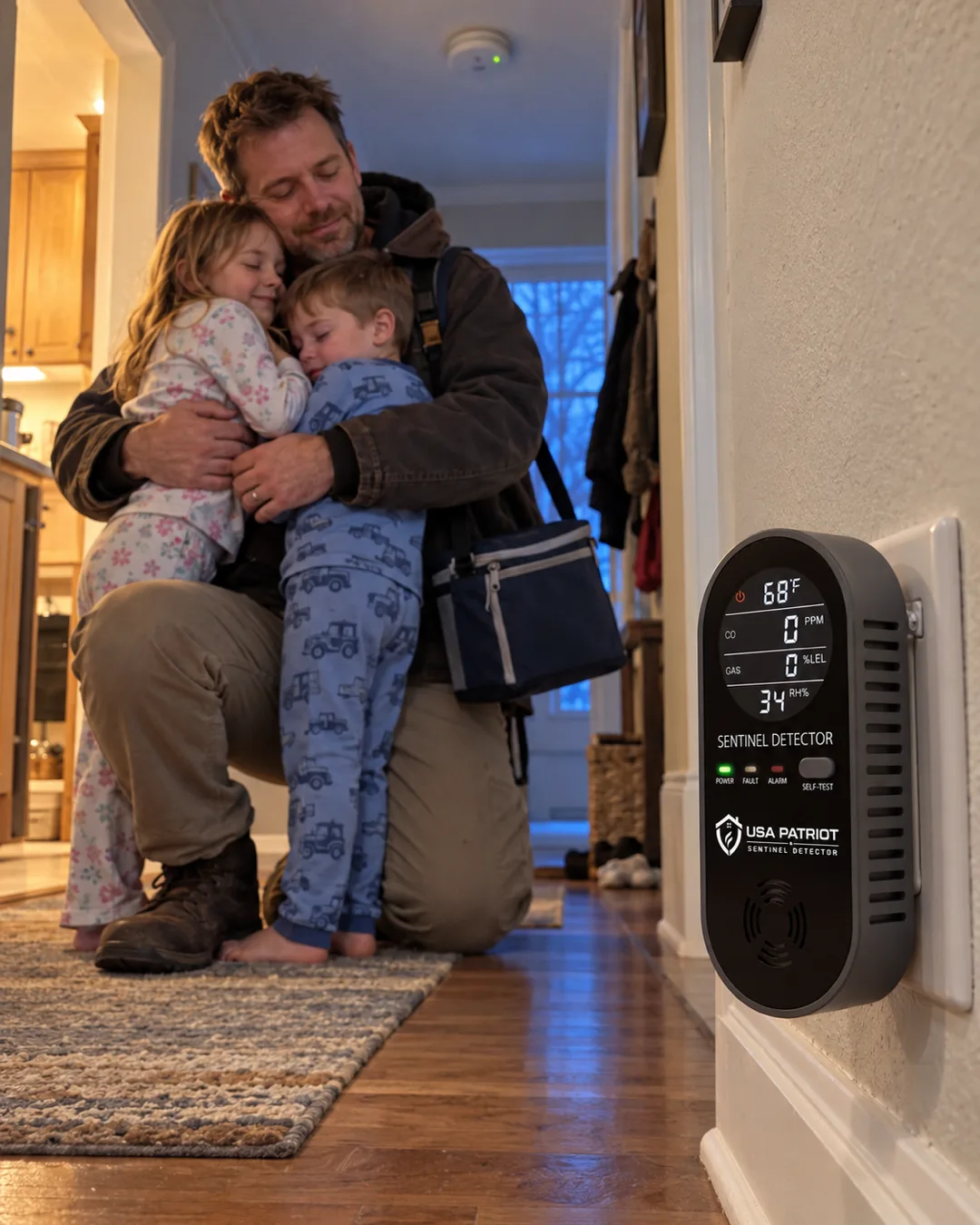
Picture two hallways at 6:15 on a January morning.
In the first one, a dad walks past a green dot, kisses the kids and goes to work, hoping.
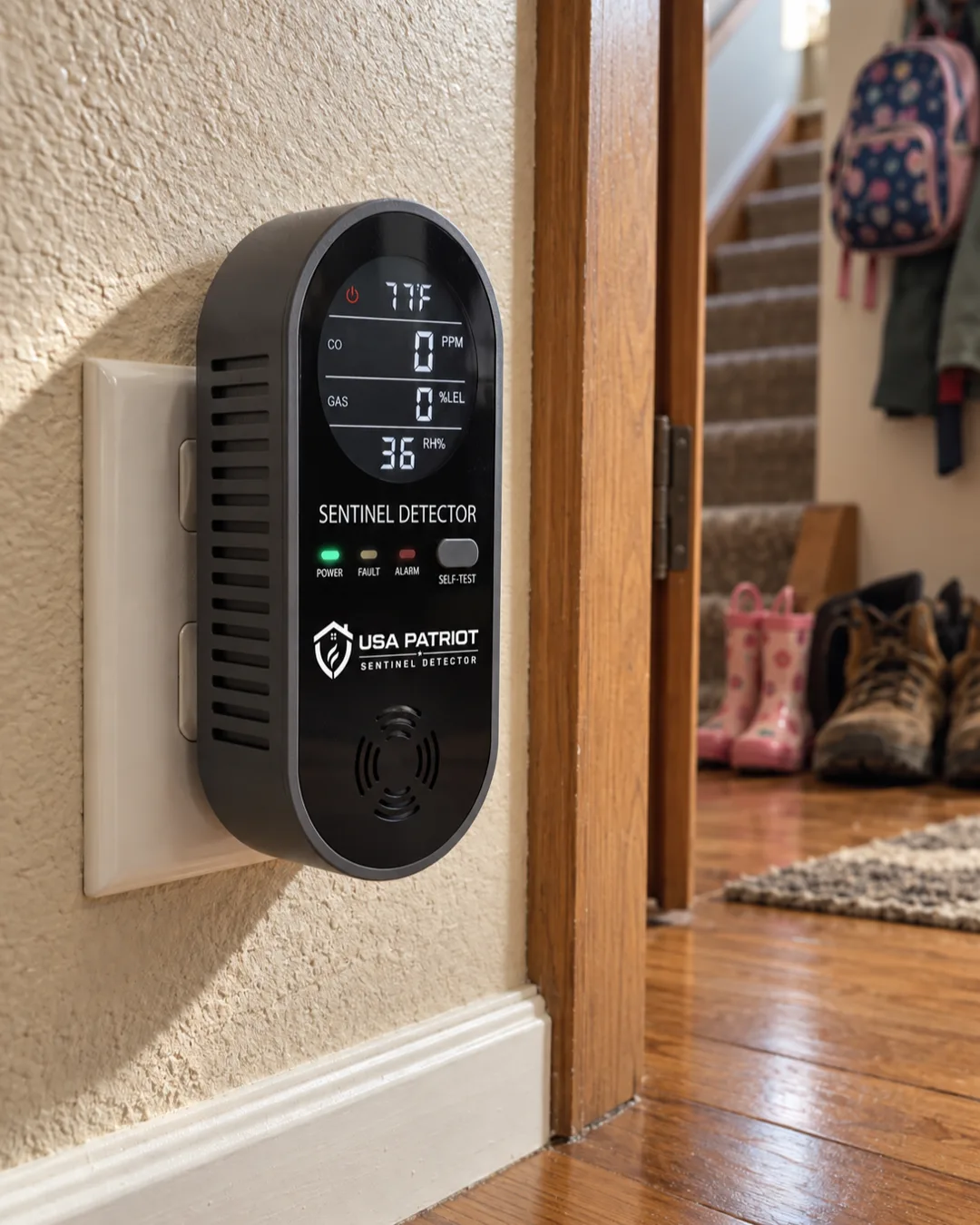
In the second one, a dad walks past a small screen that reads this:
Same hallway. Same furnace. Same dad who loves them. Completely different morning.
PASS ONLY IFThe device shows you a live reading of the air.
Question 2 of 7 When does it actually speak up?
CO is short for carbon monoxide. You can't see it, smell it or taste it.
Almost every CO alarm sold in America follows the same safety rule book. It's called UL 2034.
CO is measured in "parts per million," or PPM. Think of it as how much poison is mixed into the air.
Under that rule book, the alarm must go off at 70 PPM. But even at 70, it's allowed to wait one to four hours before it makes a sound. Below 70? It is not required to say a word.
A perfectly good alarm under the rule book. All night.
Remember that foggy morning? A healthy adult shrugs it off.
A toddler in the bedroom over the furnace can't. Her body is smaller. She breathes faster. She can't walk down the hall and tell you something feels wrong. She just keeps sleeping.
Neither can an 80 year old father who sleeps heavy and takes three pills before bed.

The cruelest part? Some of those homes had a green light glowing somewhere. Working perfectly. Exactly the way it was built to.
PASS ONLY IFThe device warns you long before 70.
Question 3 of 7 Does it smell gas too, or only CO?
Your CO alarm is a CO alarm. It cannot detect natural gas at all. Not late. Not a little. Never.
"But I'd smell the gas," you say.
Maybe. But your nose is not what it was at 30. Our sense of smell fades with age, and almost nobody notices it fading.
Now picture your mother. She's 81. She lives alone. She makes her oatmeal on the same gas range she's had since 1994.
She turns the knob back. Almost all the way, but not quite. The flame is out. A little gas keeps leaking.
At 2 a.m., she's asleep. She smells nothing. And the alarm in her hall keeps glowing green.
It was built for a different gas. For years she slept down the hall from that stove. She trusted a box that was never built to notice it. So did you.
PASS ONLY IFOne device watches carbon monoxide AND natural gas.
Question 4 of 7 Where does it live? Can you actually see it?
Look up. Is your detector on the ceiling? Then you probably haven't really looked at it in years. Nobody reads a ceiling.
Now think about the one in your mother's hallway. When did she last look up at it? When did you?
A device you never see is a device you never check. You don't notice when it gets old, or gets unplugged, or quietly goes dark.
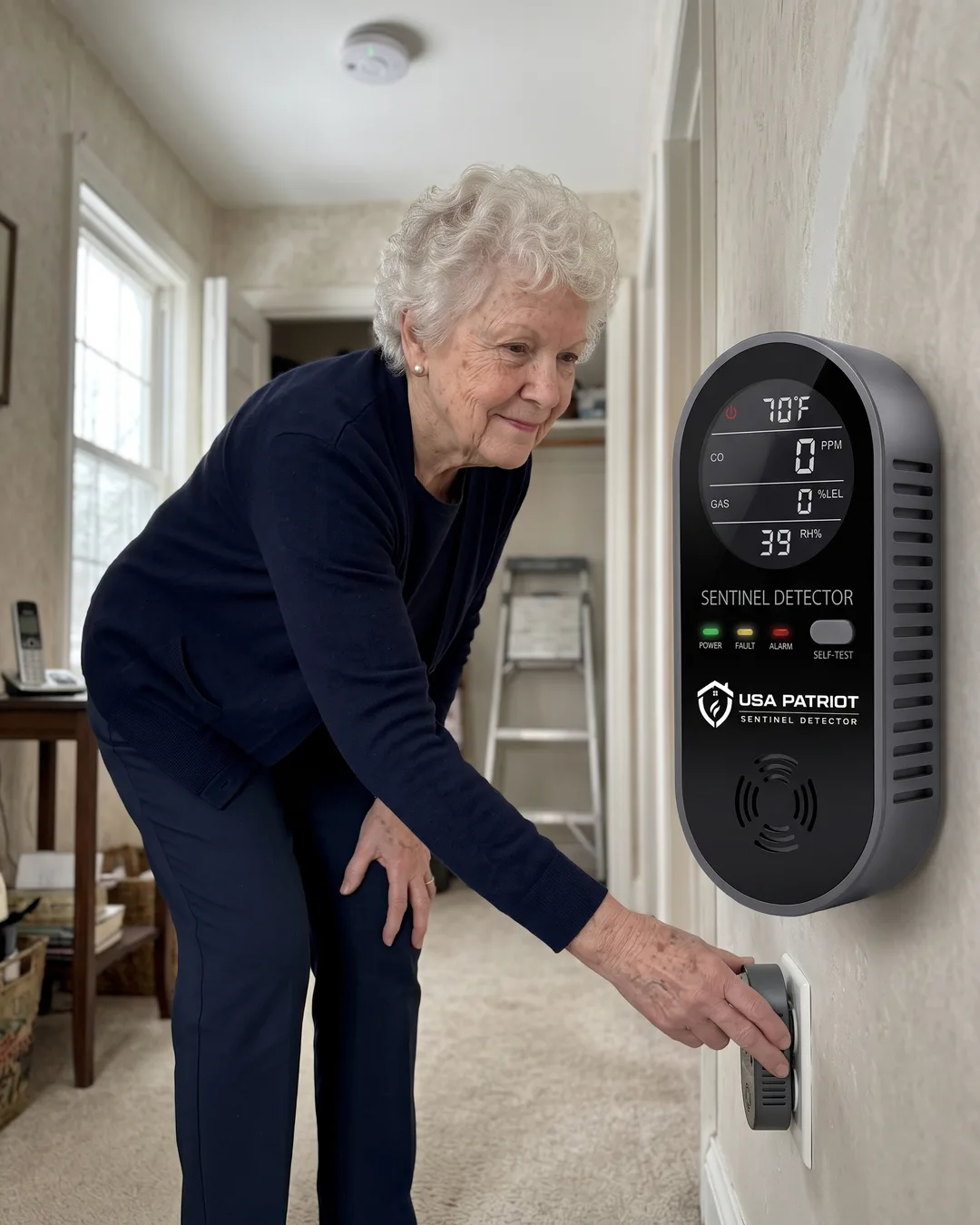
Now picture a screen at eye level, in the hall between the kids' rooms. You pass it twenty times a day. Carrying laundry. Letting the dog out. Every pass is a free check. Glance, read, keep walking.
Pass this question only if it sits where your eyes already go.
Question 5 of 7 What does the test button really test?
You press it. It screams. You did your part.
Your dad probably did the same thing every spring for twenty years. Climbed the step stool, pressed the button, covered his ears, smiled. "We're good."
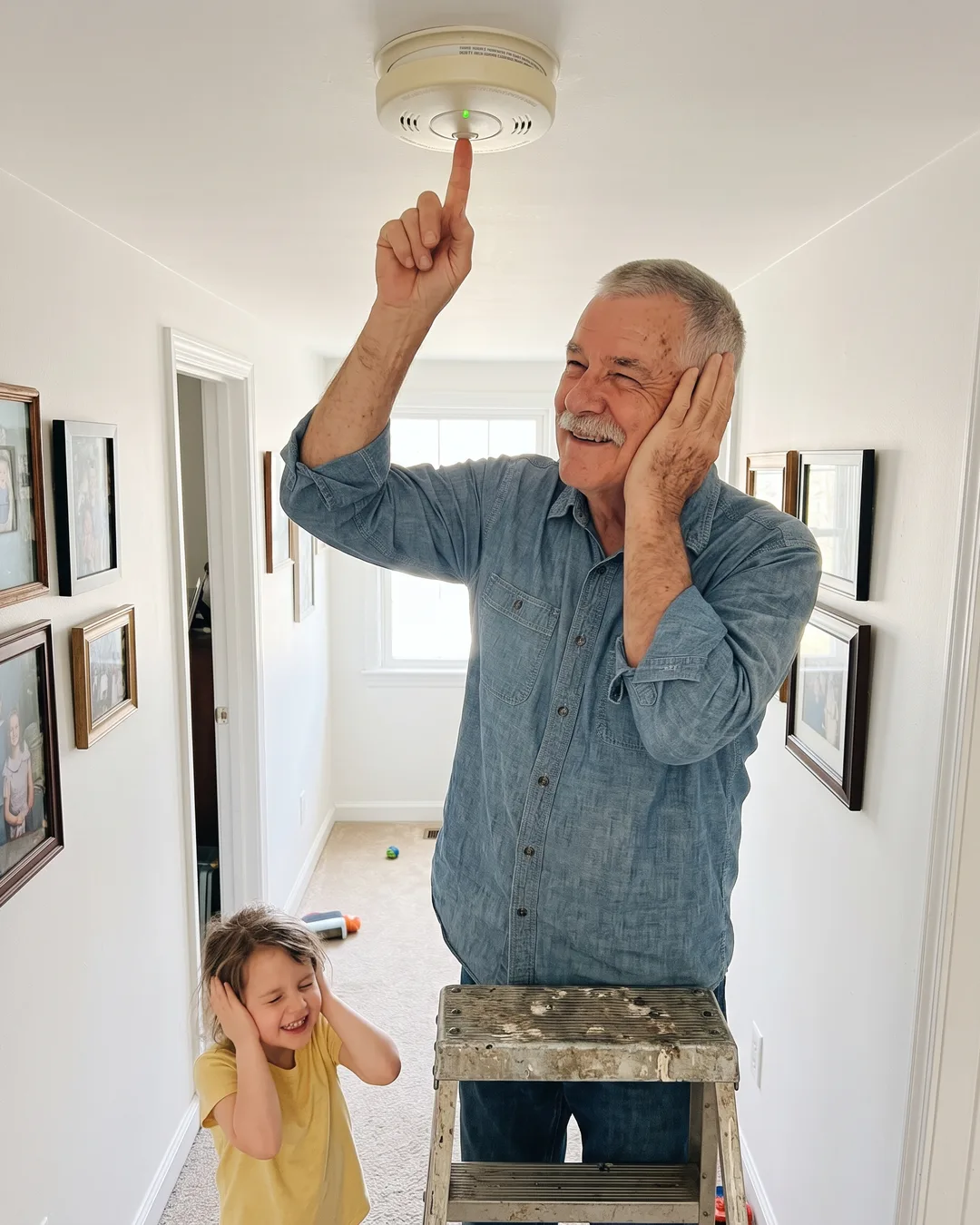
But ask the honest question. What just got tested?
On most standard alarms, the button tests the horn and the battery. It confirms the thing can make noise. Not one molecule of carbon monoxide touched that sensor when he pressed it.
And the sensor wears out. That's the part inside that actually checks the air. Flip your alarm over tonight and look for a date on the back.
A lot of families find one older than their grandkids.
That's a hard moment. You stand in your own hallway, holding a date from another decade. You think about every winter since. Every Christmas with the whole family asleep upstairs.
You bought the alarm. You put it where the box said. You pressed the button. You did everything right.
And it still could have happened. The green light glows exactly the same on a tired sensor as on a fresh one.
Pass this question only if you see the reading every day. Not just a horn once a year.
Question 6 of 7 Can a 74 year old put it in alone?
Does it need a ladder? A drill? A call to your son two hours away?
Then it doesn't get done. Mom won't call. She doesn't want to be a bother. So the old alarm stays up there another winter.
Nobody should risk a broken hip to reach a ceiling alarm.
Pass this question only if it goes in with no tools. No ladder. No wiring. No help.
Question 7 of 7 Who stands behind it if it fails?
Turn the box over and look for the guarantee. Most alarms quietly stop being reliable after a few years. Many even print an expiration date on the back.
The thing guarding your grandkids while they sleep should come with a promise. In writing.
Pass this question only if the company puts its own money on the line.
The Scorecard: How The 6 Usual Suspects Did
We're not naming brands. You'll recognize yours.
The white combo alarm on the ceiling
The one the builder or the last owner left you. Smoke plus CO in one round puck.
- Shows a number? A light.
- Warns before 70? Built to the rule book.
- Detects gas?
- Where you can see it? On the ceiling.
- Test button tests the air? The horn.
- Easy for anyone to install? Ladder.
It's a fine smoke alarm. But as your only warning for CO and gas? It's a coin flip. And your family is the bet.
The cheap plug in CO alarm with a green light
Most people think this is the "good one." It's easy to plug in, so it passes Question 6. But look at the front. A green light, maybe a button. No screen. Same 70 PPM rule. It only checks CO.
Right shape. Wrong answer. The same silent box, just closer to the floor.
The hardwired alarm the builder put in
"Wired into the house has to be better." But the wire is only for power. It doesn't sense any better. Same 70 PPM rule. Still a light. Usually CO only. Still on the ceiling. Same button.
The "smart" ceiling alarm with the phone app
The expensive one. It sends an alert to your phone. Many follow the very same 70 PPM rule. A ping at 70 is still a ping at 70. Many can't detect natural gas. And it's still on the ceiling.
Fails 4 to 5 of 7, depending on the model. Fancy doesn't mean early.
The battery puck from the drugstore
Light only. Same 70 PPM rule. CO only. Out of sight. The button only tests the horn. And the battery can die quietly in February.
Your own nose plus the yearly furnace check
Your nose can't smell carbon monoxide at all. No odor, no color, no taste.
The fall furnace check is smart. Keep doing it. But it happens on one Tuesday in October. A cracked furnace part or a blocked vent pipe doesn't wait for the repairman. It happens on a January night while your family sleeps.
It's not a plan. It's a hope.
So What Passed All 7?
After all of that, one device answered "yes" to every question. It's called the USA Patriot Sentinel Detector.
It's a small dark oval about the size of your hand. It plugs into any normal wall outlet.
On the front, right where your eyes land, is a round screen. It shows you, live:
No app to forget. No ladder. No wiring.
- Shows a number? Yes. A live CO reading, right on the screen. According to the maker, it reads from 0 PPM.
- Warns before 70? Yes. According to the maker, it sounds its alarm at 10 PPM. Not 70. Not after four hours. And you can watch the number climb.
- Gas too? Yes. According to the maker, it watches CO, natural gas and propane in one unit.
- Where you can see it? Yes. It lives in the outlet. By the furnace closet. In the hall by the bedrooms.
- Can you see the sensor working? Yes. You see the reading every time you walk by. According to the maker, the self test checks the whole system.
- Easy for anyone? Yes. Plug it in. About 30 seconds. A 74 year old can do every room before lunch.
- Who stands behind it? A lifetime replacement guarantee and a 90 day money back guarantee.
According to the maker, it meets UL 2034 and is ETL listed. That means an independent lab checked it for safety.
It was also built with input from first responders. They kept seeing the same thing. Families with "working" detectors that never warned them.
Enter your ZIP to see if your area qualifies.
The Moment People First See A Real Number
For a lot of families, the first look at that screen was the first time in 20 years they really knew. In their own words, from verified reviews on the maker's site:
"I'm going to be 80 years old and I've often thought, 'what would I do if something happened because I live alone?' Now I look at that little screen, see '0,' and I know. I'm not alone."
Thomas D. · verified review"I kept one for myself and gave one to each of my adult children for their homes. I can't think of a better gift to give my family. A gift that says 'I love you and I want you safe' without saying 'I'm worried about you.'"
Robert M. · verified review"First week: Sentinel Detector showed 29 PPM. [Our old alarm?] Silent. Green light. We had a cracked flue pipe. Four kids in this house. I don't even want to think about what could have happened."
Jon T. · verified reviewA flue pipe carries the furnace's fumes out of the house. Theirs was cracked.
Read that last one again. Silent. Green light. Four kids.
That family did everything right, too. The difference is, now they know.
What It Looks Like To Live With One
Saturday nightThe grandkids sleep over. Two of them are in the room right above the furnace.
Before bed, your seven year old granddaughter runs to the hall and reads the screen out loud like it's her job. "Zero, Grandpa!"
You actually sleep through the night. First time in a long while you didn't get up at 3 a.m. to "just check on them."
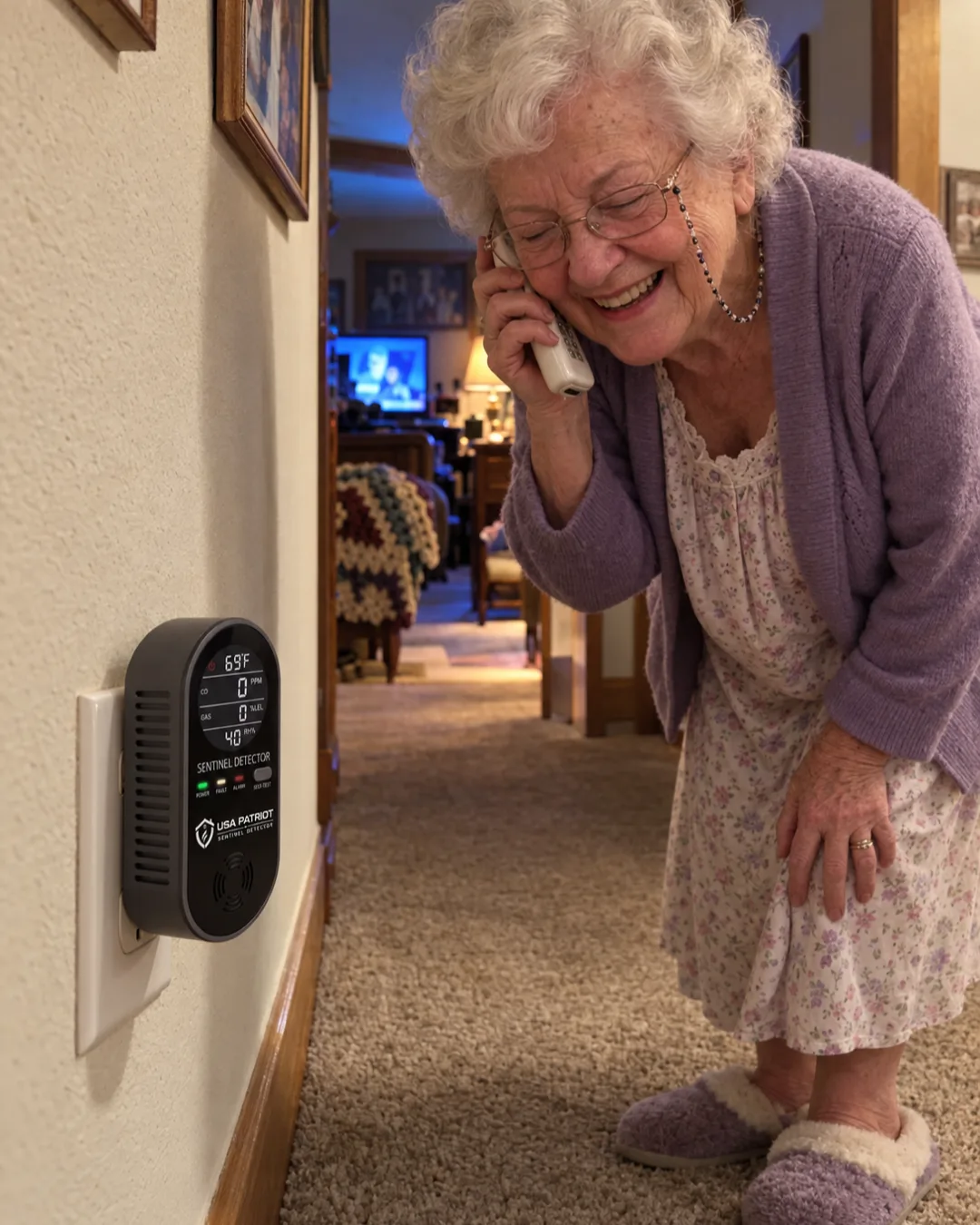
Your mother is 78. She lives alone three states away.
You"Mom, what does the screen say?"
She walks to the hall.
Mom"Carbon monoxide, zero. Gas, zero. Now let me watch my show."
You hang up and laugh. For the first time all winter, you don't lie awake picturing her furnace.
That is what you're really buying. Not a gadget. A number you can say out loud, and the sleep that comes after it.
"But I Already Have A Detector."
Good. Keep your smoke alarms. You need them for fire.
Is your CO protection a green light on the ceiling? Then you don't have a reading. You have a hope with a battery in it.
How Many Do You Actually Need?
The simple rule: one by every flame, one by every sleeper. Walk your house and count:
- The furnace or boiler
- The water heater
- The gas stove or range
- The door to an attached garage
- The hallway outside the bedrooms
- One more on every floor where someone sleeps
Most houses need about four. That's why most families pick the 4 pack. Furnace, water heater, kitchen, bedrooms.
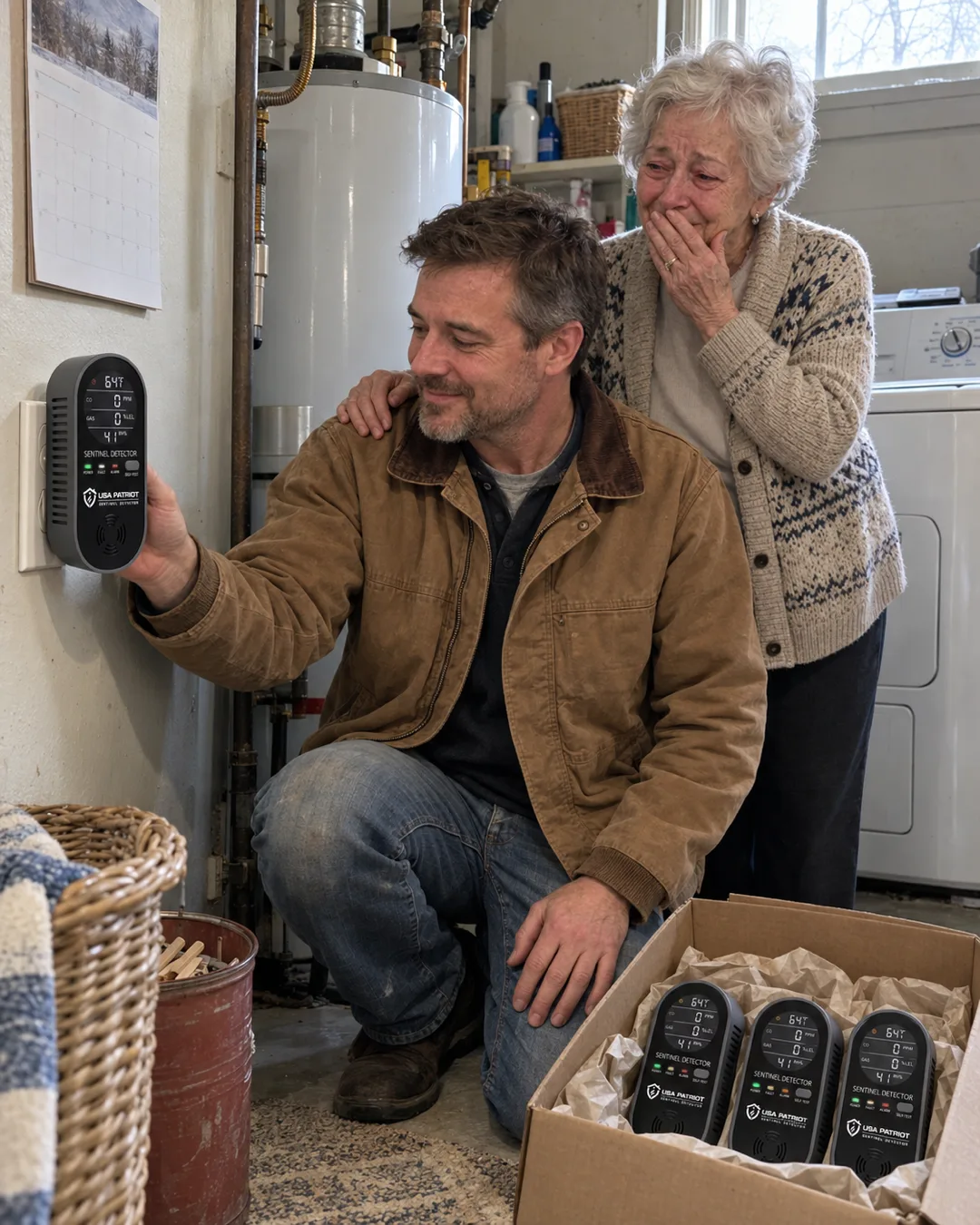
Do your parents live on their own? The 8 pack covers your house and theirs. Four for you. Four for Mom and Dad.
They spent years making sure you were safe at night. Now it's your turn.
Plug theirs in on your next visit. From then on, every phone call can end with "What does the screen say?"
Enter your ZIP to see if your area qualifies.
NOTE: According to the maker, the Sentinel is sold direct, not on Amazon or eBay. That's how they offer the multipack savings.
Multipack Savings + Free Shipping
One by every flame. One by every sleeper. Plus Mom's house.

- A live CO and natural gas reading, right on the screen
- Plugs into any outlet in about 30 seconds
- 90 day money back guarantee
- Lifetime replacement guarantee
- Free shipping on multipacks
Every Bit Of Risk Sits On Their Side
MONEY
BACK
Live with them through the coldest part of the year. If you don't feel calmer, safer and finally sure about your air, you get your money back.
Then a lifetime replacement guarantee. If a unit ever stops working, it gets replaced. No "expiration date on the back" games. And on multipacks, shipping is free.
So you're not really deciding whether to spend money. You're deciding whether you want to know what your air reads at 3 a.m. while your family sleeps. With zero risk.
"My alarm is brand new."
New alarms follow the same rule book as old ones. A brand new alarm, working perfectly, can stay quiet below 70 PPM. Exactly as designed.
"Will it go off every time I cook?"
The Sentinel shows you the real level. You see what's happening, not a piercing horn with no explanation.
"I live in an apartment."
If anyone in your building has a gas furnace, water heater or stove, CO can travel through shared walls and vents.
"Why isn't it at the big box store?"
According to the maker, it's sold direct, not on Amazon or eBay. That's how they offer the multipack savings.
Two Ways This Winter Can Go
The furnace will run every night. The windows will stay shut.
Option 1
You close this page. You tell yourself the green light has been fine for years.
The grandkids come for Christmas. They sleep in the room over the furnace. Your mother cooks alone on her old gas range.
Maybe nothing happens. You just never find out what the air was reading.
Option 2
A small box arrives this week. You walk the house with your grandson and plug them in.
Furnace. Water heater. Kitchen. Bedrooms. Thirty seconds each. He reads every screen out loud. "Zero. Zero. Zero."
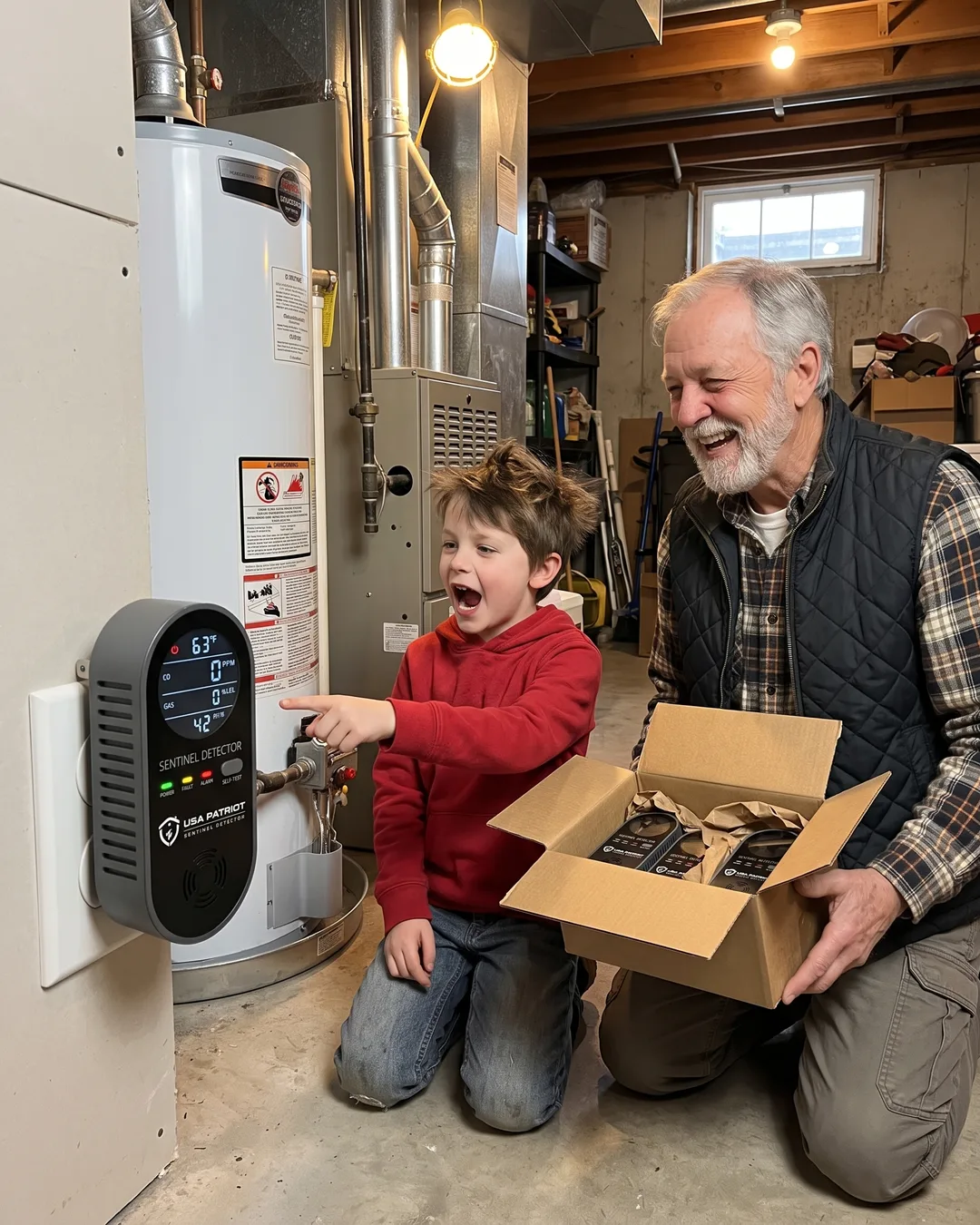
Then you drive to your mother's and do hers. That night you check the locks like always. Then you stop in the hall and read one more number.
It's not your fault nobody ever handed you these 7 questions. You did everything right with what you were given.
But now you have them. And you already know which device in your home just failed.
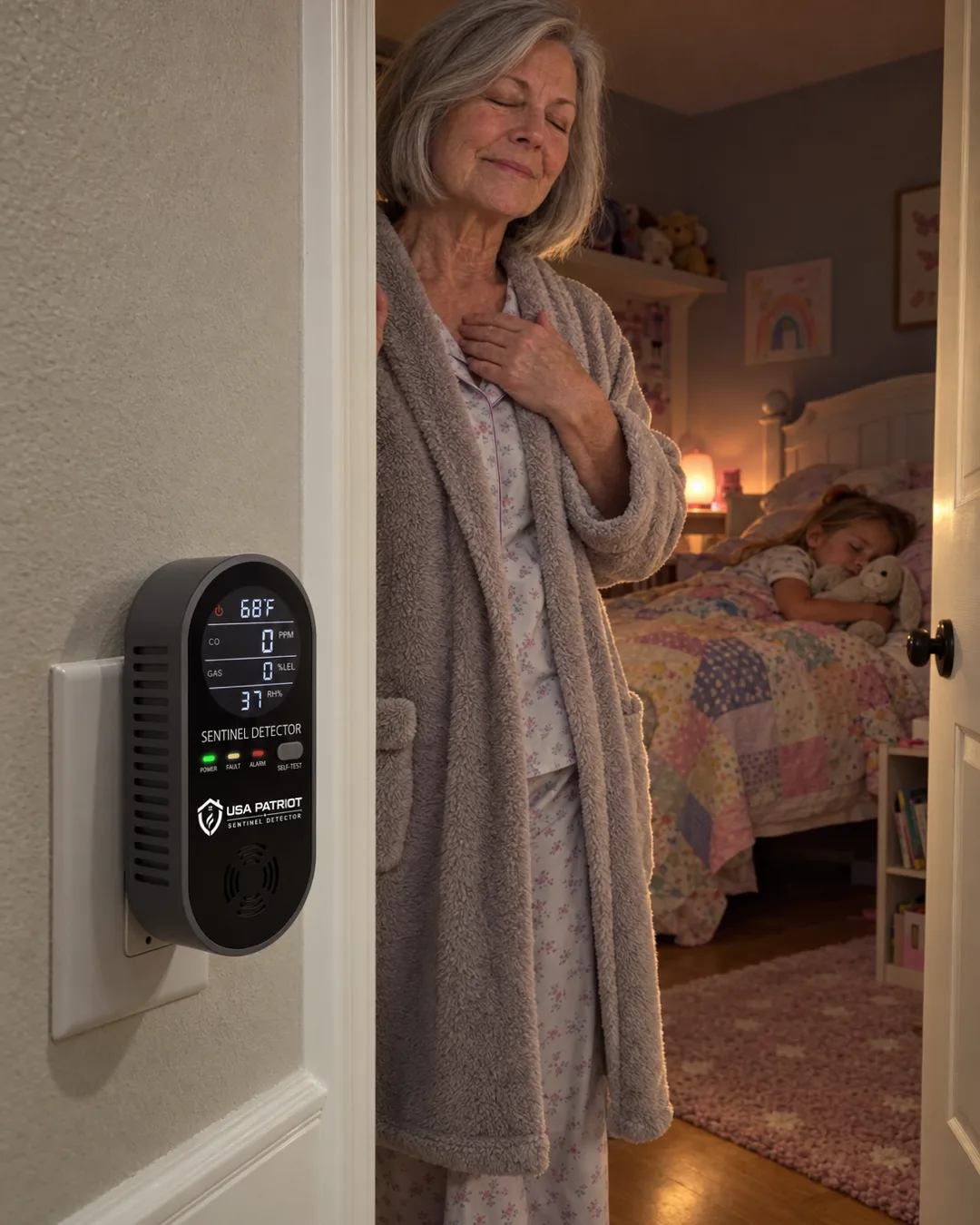
The house is quiet. The furnace hums in the basement.
You walk down the hall in your socks. You push the guest room door open an inch. Your granddaughter is asleep sideways, one foot out from under the quilt, the rabbit tucked under her chin.
You glance at the little screen by her door.
You pull the door almost shut. And for the first time in years, you don't lie there listening to the house.
You just sleep. Because you know the number.
You were always the one who checks. Now you can actually see.
Linda
Grandmother of 4, Toledo OH
Your 5 Minute Homework Tonight
Before you go to bed, do this.
- Walk to every CO alarm in your house.
- Ask Question 1. Number or light?
- Flip it over. Look for the date.
- Ask yourself if it can smell gas.
- Then count your flames and your sleepers.
If your house fails, don't beat yourself up. Just fix it this week. Then call your mother and ask her to look at hers.
P.S. Remember just one thing: Question 1. A green light means power. A number means knowing. Everything else follows from that.
P.P.S. Buying for parents who live alone? Get the 8 pack and keep four for yourself. It's the only gift they'll check every night. And the only one that lets you sleep, too.
Enter your ZIP to see if your area qualifies.